Motorcycle Helmet Laws by State
17 states require helmets for all riders, 30 for some, and 3 for none. The full 50-state table, checked November 10, 2026.
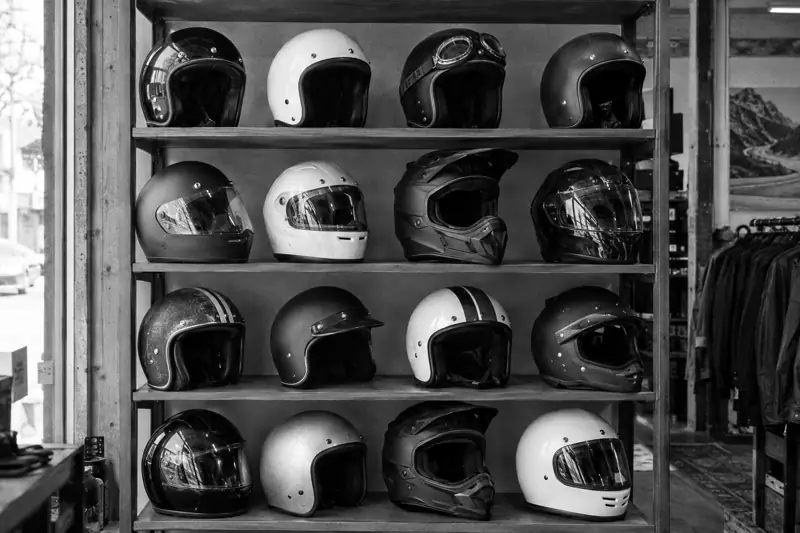
17 states require every rider to wear a helmet. 30 require one only for some riders, most often by age. Illinois, Iowa and New Hampshire have no helmet law at all. The table below follows the IIHS motorcycle helmet laws table, checked November 10, 2026.
Helmet law in each state
| State | Who must wear a helmet |
|---|---|
| Alabama | All riders |
| Alaska | 17 and younger |
| Arizona | 17 and younger |
| Arkansas | 20 and younger |
| California | All riders |
| Colorado | 17 and younger, and passengers 17 and younger |
| Connecticut | 20 and younger |
| Delaware | 18 and younger, plus novice riders for two years after endorsement |
| Florida | 20 and younger |
| Georgia | All riders |
| Hawaii | 17 and younger |
| Idaho | 17 and younger |
| Illinois | No helmet law |
| Indiana | 17 and younger |
| Iowa | No helmet law |
| Kansas | 17 and younger |
| Kentucky | 20 and younger |
| Louisiana | All riders |
| Maine | 17 and younger |
| Maryland | All riders |
| Massachusetts | All riders |
| Michigan | 20 and younger |
| Minnesota | 17 and younger |
| Mississippi | All riders |
| Missouri | 25 and younger |
| Montana | 17 and younger |
| Nebraska | 20 and younger |
| Nevada | All riders |
| New Hampshire | No helmet law |
| New Jersey | All riders |
| New Mexico | 17 and younger |
| New York | All riders |
| North Carolina | All riders |
| North Dakota | 17 and younger |
| Ohio | 17 and younger |
| Oklahoma | 17 and younger |
| Oregon | All riders |
| Pennsylvania | 20 and younger |
| Rhode Island | 20 and younger |
| South Carolina | 20 and younger |
| South Dakota | 17 and younger |
| Tennessee | All riders |
| Texas | 20 and younger |
| Utah | 20 and younger |
| Vermont | All riders |
| Virginia | All riders |
| Washington | All riders |
| West Virginia | All riders |
| Wisconsin | 17 and younger |
| Wyoming | 17 and younger |
States that require helmets for all riders
Alabama, California, Georgia, Louisiana, Maryland, Massachusetts, Mississippi, Nevada, New Jersey, New York, North Carolina, Oregon, Tennessee, Vermont, Virginia, Washington and West Virginia.
States with partial helmet laws
In these states the requirement depends on age, and in a few on licence status or insurance: Alaska, Arizona, Arkansas, Colorado, Connecticut, Delaware, Florida, Hawaii, Idaho, Indiana, Kansas, Kentucky, Maine, Michigan, Minnesota, Missouri, Montana, Nebraska, New Mexico, North Dakota, Ohio, Oklahoma, Pennsylvania, Rhode Island, South Carolina, South Dakota, Texas, Utah, Wisconsin and Wyoming. Age cut-offs range from 17 to 25. A rider who is exempt at home is not exempt when crossing into a universal-law state.
States with no helmet law
Illinois, Iowa and New Hampshire do not require any rider to wear a helmet.
What the federal data shows
In 2023, 35% of motorcyclists killed were not wearing a helmet, based on known helmet use. In states without a universal helmet law the unhelmeted share was 51%. In states with one it was 10%. Observed use of DOT-compliant helmets was 73.8% nationally. These figures are from the NHTSA Traffic Safety Facts: Motorcycles, 2023 data.
Does riding without a helmet hurt an injury claim?
A helmet does not cause or prevent a crash, so it rarely affects who is at fault. It can affect the amount. Where the injury is to the head or face, an insurer may argue that part of the harm would have been avoided with a helmet and ask for a reduction. How far that argument goes depends on the state's fault rule and on whether its law lets helmet evidence in at all. Read helmet laws and injury lawsuits and comparative negligence.
The helmet standard
Where a helmet is required, it must meet the federal DOT standard, FMVSS No. 218. See the helmet safety page.
How to read a partial helmet law
Partial laws are written around the person, not the trip. Most set an age, and a rider or passenger under that age must wear a helmet. Some add conditions for adults, such as holding a minimum amount of medical insurance, having held a license for a set time or having completed a training course. The table gives the short form for each state. Before relying on an exemption, read the statute or the state's motor vehicle agency page, because the conditions are specific and are checked at the roadside.
Passengers and visiting riders
Helmet laws generally apply to passengers as well as operators, and the age rule is applied to each person separately, so an adult rider may be exempt while a younger passenger is not. The law that applies is the law of the state you are riding in. A rider who is exempt at home must wear a helmet when crossing into a state that requires one for all riders.
What counts as a legal helmet
Where a helmet is required, it must meet the federal standard, FMVSS No. 218. The standard sets three performance tests: impact attenuation, penetration and the strength of the chin strap system. It also requires at least 105 degrees of peripheral vision to each side and limits rigid projections on the outside of the shell to 0.20 inch.
A compliant helmet carries a certification label on the back with the maker or brand, the model, the letters DOT, the words FMVSS No. 218 and the word CERTIFIED, according to NHTSA helmet guidance. Helmets certified before May 13, 2013 carry a label that reads only DOT. The agency does not approve helmets in advance. Manufacturers certify their own products, and the agency tests samples and can order a recall.
Novelty helmets
A novelty helmet with a counterfeit sticker does not satisfy a helmet law. The same guidance lists the signs: a helmet that meets the standard generally weighs about three pounds, while unsafe ones may weigh a pound or less. Unsafe helmets are usually less than an inch thick and lack a stiff foam liner. Compliant helmets have sturdy chin straps with solid rivets. The helmet safety page goes through the checks and how to fit a helmet.
Common questions
Can I be stopped only for not wearing a helmet?
Where the law applies to you, riding without a helmet is a traffic offense in its own right. Fines and enforcement practice differ from state to state.
Does a helmet law change who is at fault for a crash?
No. Fault is about what caused the collision. Helmet use comes up later, when the amount for a head or face injury is discussed. Some states limit or exclude helmet evidence, and others let a jury consider it. The fault rule in each state is in the comparative negligence guide.
How often does this table change?
Rarely, but it does. Legislatures amend helmet laws from time to time, usually by changing an age or an insurance condition. This page was checked against the source on November 10, 2026, and changes that have been verified are recorded on the legal updates page.